“SaaStorm became a key part of our inbound motion. Their SEO and content support helped us scale a consistent flow of high-intent traffic and build a content engine that supported £250K+ in inbound revenue. They plugged into our system and delivered every step of the way.”



When OneUp Sales approached SaaStorm in late 2023, their outbound strategy was already humming. But inbound? That was a different story.
Their blog was generating zero clicks and just 50 daily impressions. With such a limited digital footprint, they weren’t attracting leads, let alone converting them.
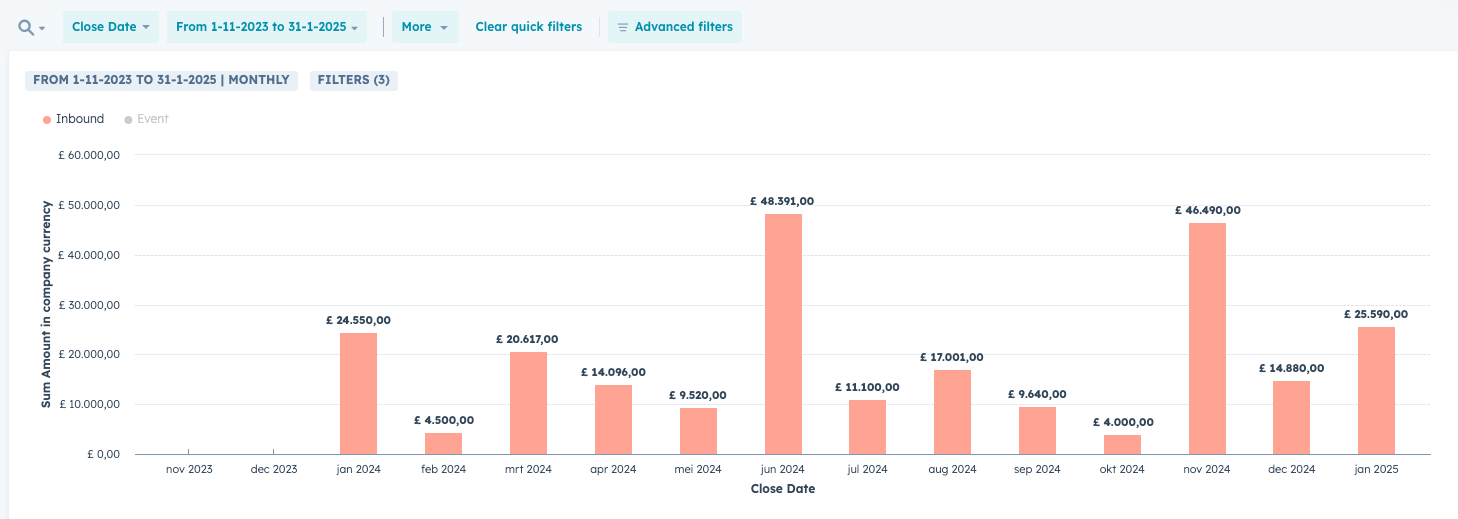
Fast forward to today, and the story has completely changed. OneUp now averages 200 daily clicks, 15,000 daily impressions, and has generated £250K in new MRR directly from inbound efforts since November 2023.
This is the story of how SaaStorm helped turn inbound into OneUp’s highest-performing growth channel.
Note: While this case study highlights SaaStorm’s SEO and content contribution, OneUp’s success was a collective team effort. Alongside our work, the internal team ran paid ads, executed demand generation campaigns, and continually optimized messaging and conversion. Our role was to become a tightly integrated extension of that broader inbound engine.
Before SaaStorm:
- ~30 daily blog clicks
- ~900 daily impressions
- Limited inbound pipeline contribution
- Unoptimized content with low visibility
After SaaStorm, blog now powers SEO, LinkedIn, and lead generation:


The challenge
OneUp Sales had a lean marketing team and a strong product, but they weren’t capturing demand through organic channels. Their content was underperforming, the blog was outdated, and inbound wasn’t contributing to the pipeline.
They didn’t just need blog posts; they needed a revenue-driven SEO and content strategy.


The strategy: SaaStorm’s discovery phase
We kicked off the engagement with our tried-and-true 2-week Discovery Phase: a strategic deep dive into OneUp Sales’ product, ICP, and market landscape.
Here’s what we delivered:
- Keyword Research: 500+ relevant sales keywords (30K+ US volume) and 140+ recruitment-related keywords (3.9K volume), each mapped into two distinct topic clusters.
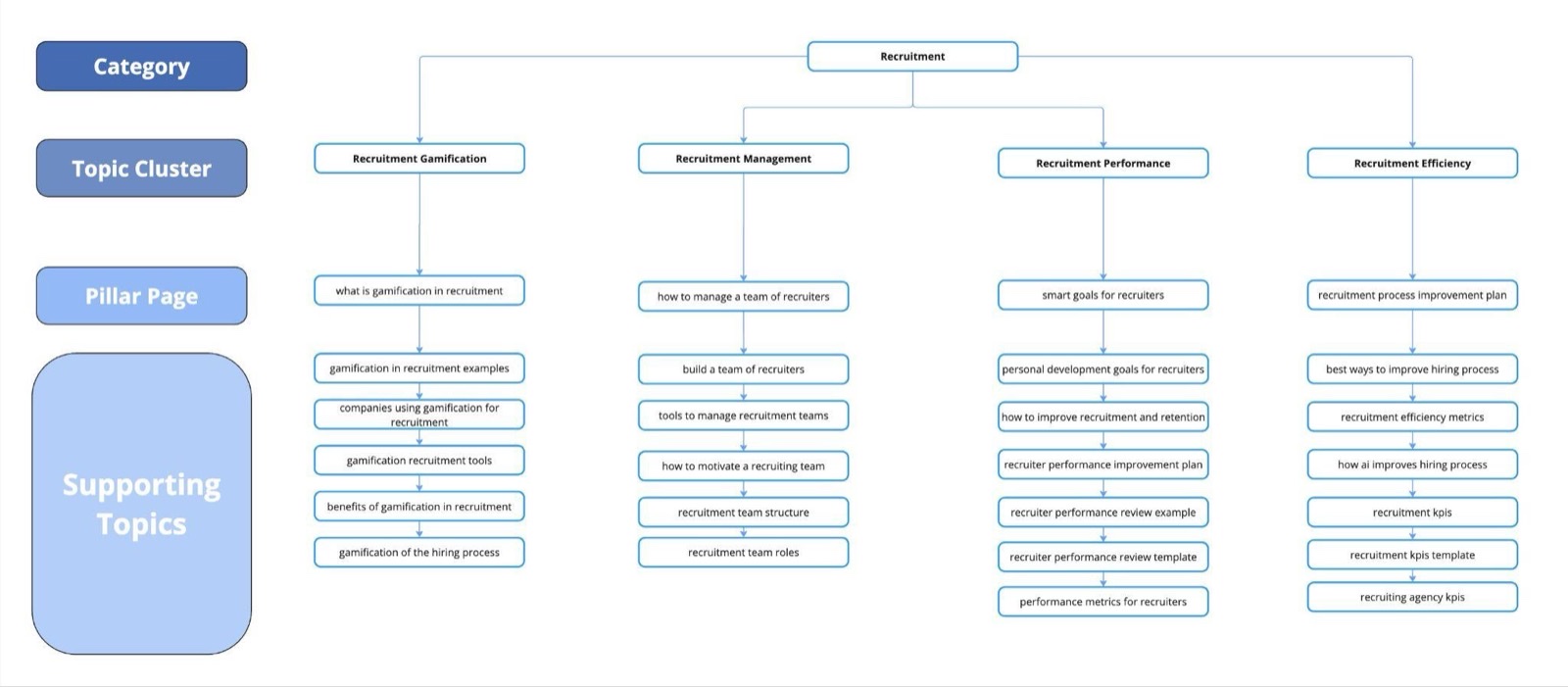
- Topic Ideation: 29 sales-focused and 11 recruitment-focused blog topics strategically aligned to different funnel stages.
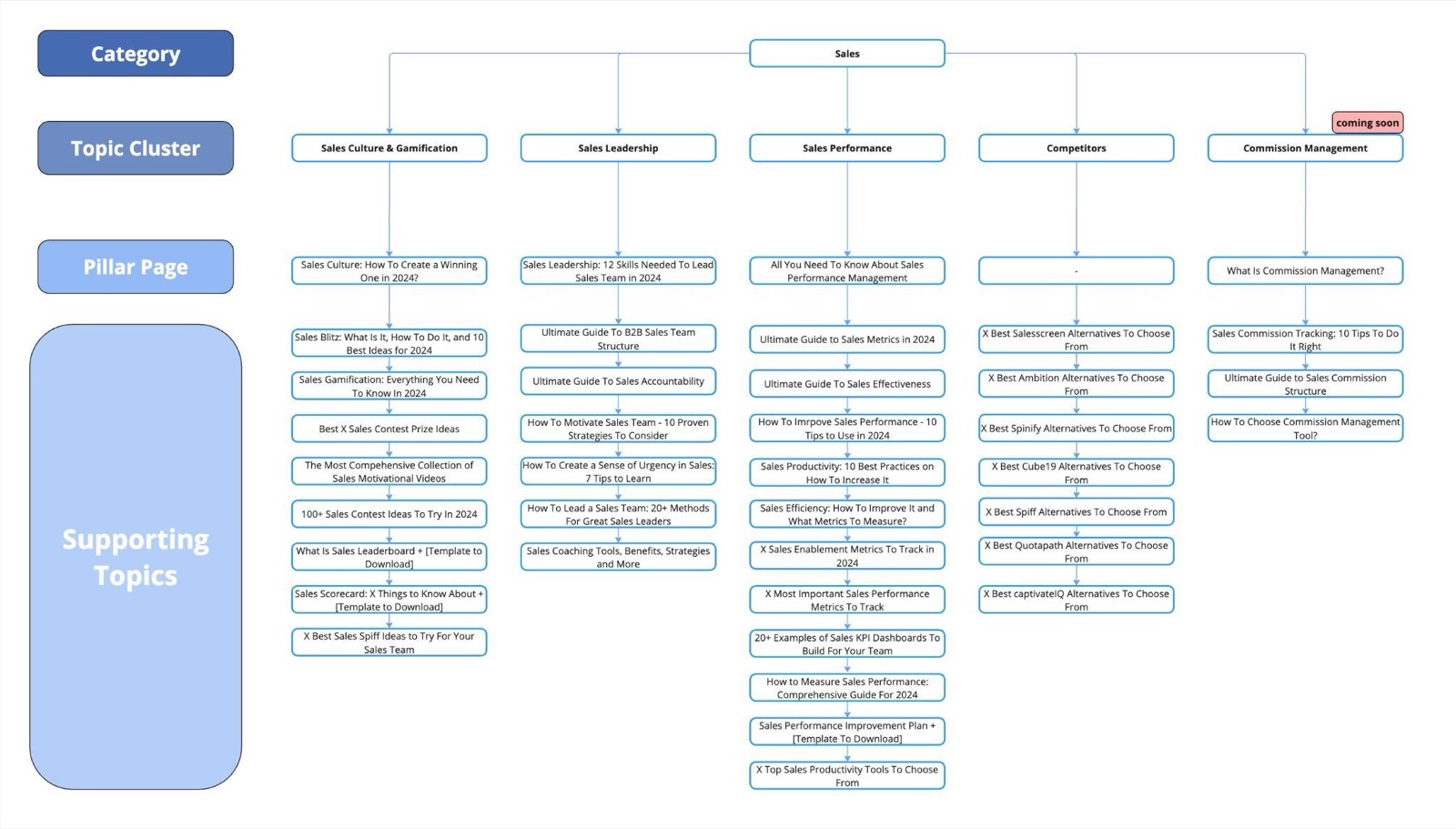
- Internal Linking Strategy: Smart architecture recommendations to improve crawlability, authority flow, and UX.

- Technical SEO Audit: Prioritized action items to eliminate roadblocks and unlock growth.
- Growth Opportunities: Tailored list of inbound quick wins and mid-term tactics.
- 3-Month Backlink Plan: Targeting product pages and strategic blog content with preferred anchors and tracking setup.
- 6-Month Execution Roadmap: Budget allocation, performance benchmarks, and production priorities.
Execution: from framework to flywheel
With the strategy set and technical groundwork complete, we moved into full execution mode. Our goal was to build a performance-driven inbound engine that would not only rank, but convert.
Systems and process
To ensure smooth execution, we established the right internal systems from day one. Using ClickUp, we built dedicated boards for SEO and content tasks, providing full transparency and alignment across both teams.
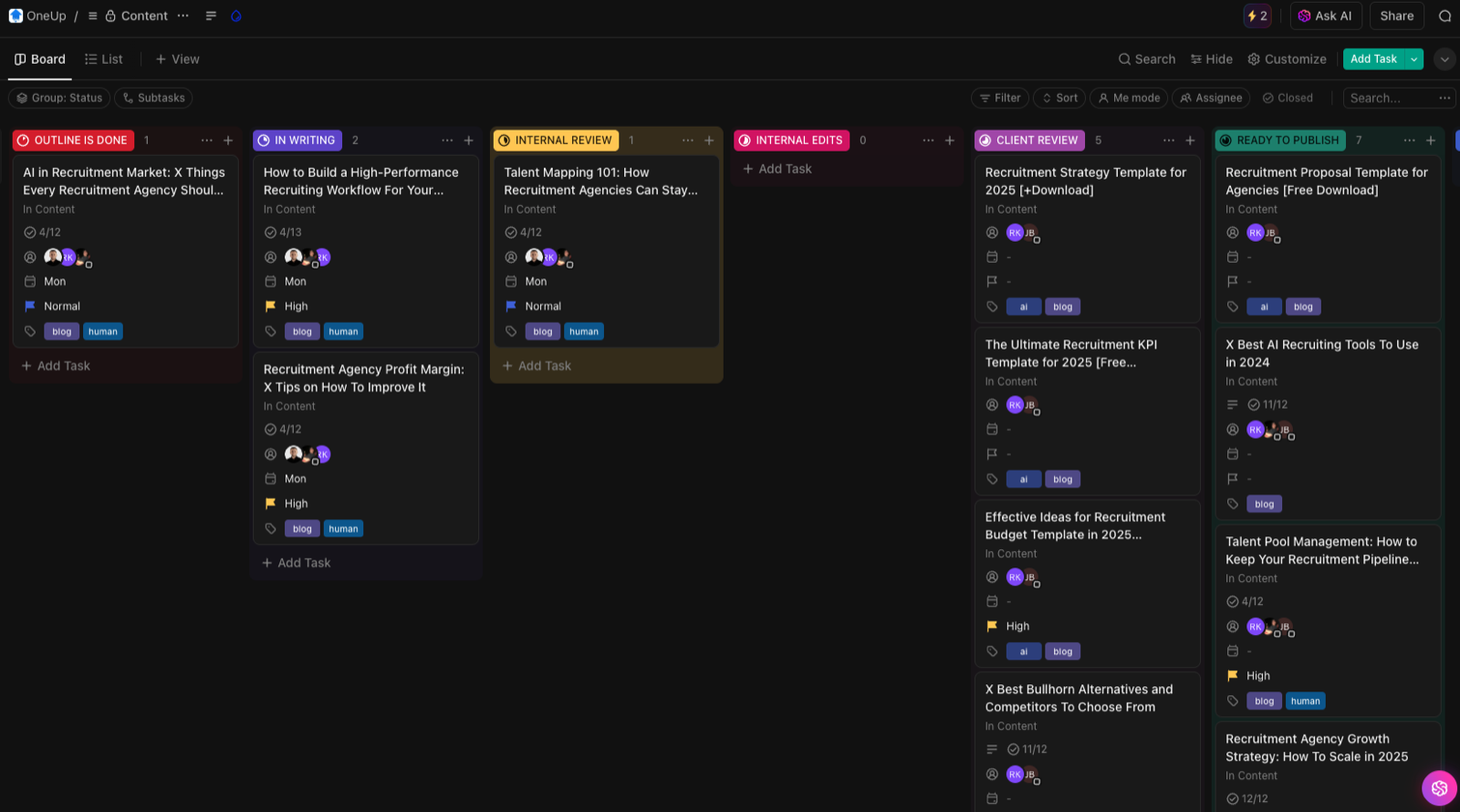
We also onboarded a dedicated SaaS content writer, immersing them in OneUp’s product, customer journey, and messaging. They didn’t just write about the product; they understood it like a team member.
With processes in place, we maintained a consistent cadence of 4–6 SEO-optimized articles per month, each strategically mapped to TOFU, MOFU, and BOFU funnel stages.
Content creation
We kicked things off by publishing high-quality, human-written content aligned with buyer intent and keyword opportunities. Each piece was carefully planned, researched, and optimized, not just to rank, but to resonate.
Over the course of the engagement, we:
- Published over 100 SEO-optimized articles tailored to OneUp’s ICP
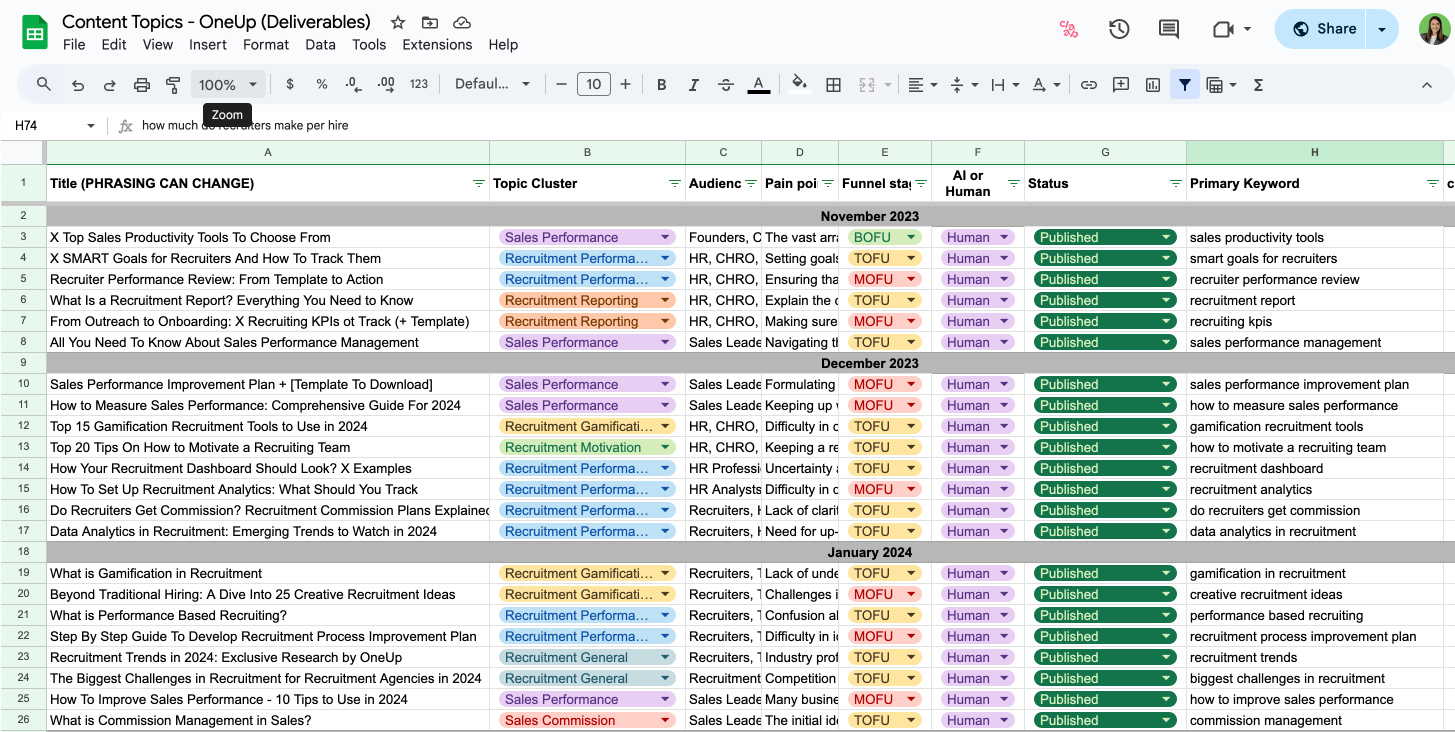
- Targeted 80K+ monthly US search volume with a focus on high-intent queries
- Maintained a low average keyword difficulty (~10) to drive faster wins
- Used SurferSEO to ensure every article hit a 75+ content score, ensuring competitiveness in search

Blog UX rebuild
- Redesigned homepage, category, and author pages
- Blog articles now include TOC, schema markup, FAQs, inline visuals, and sticky progress bars


LinkedIn content engine
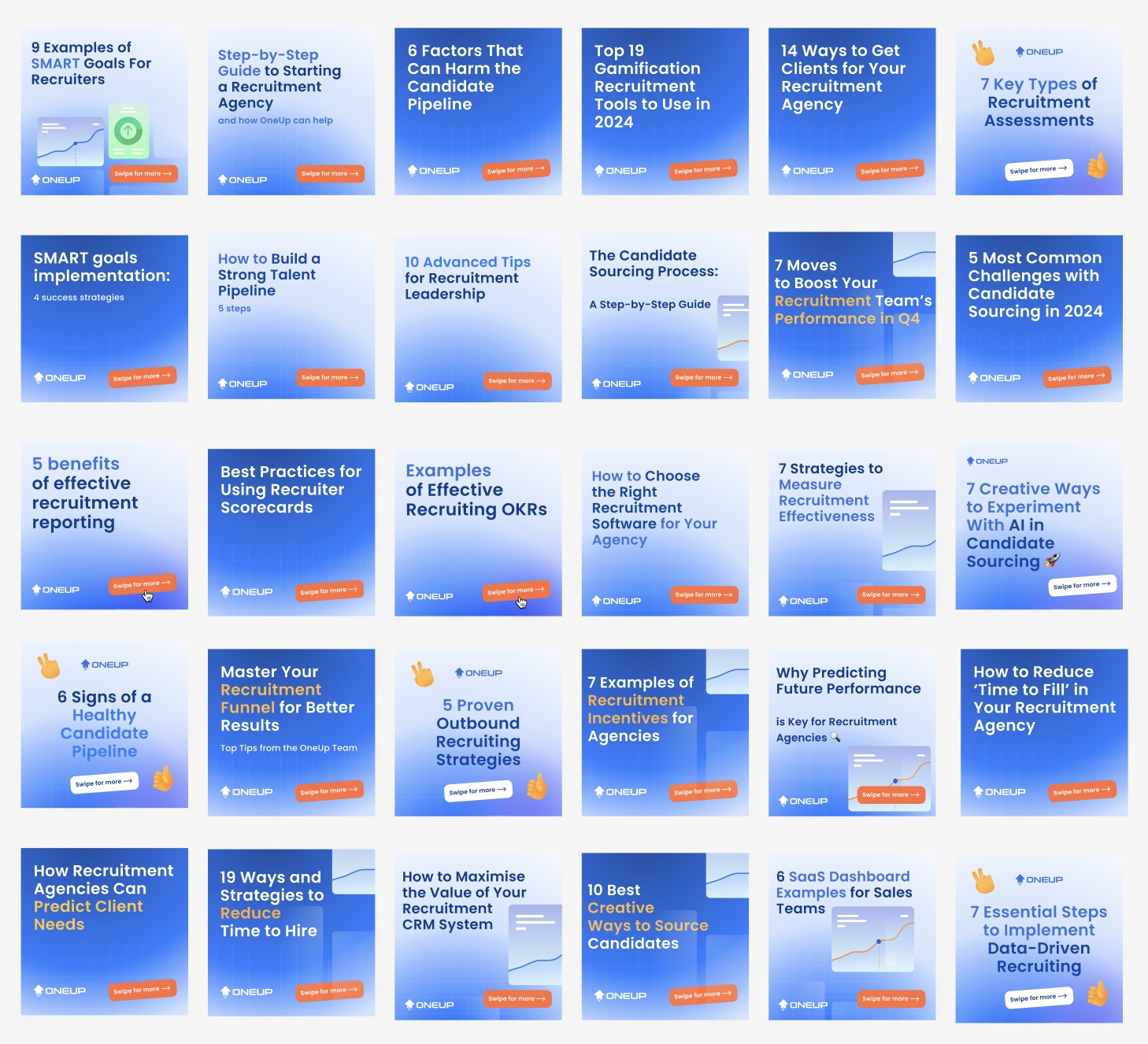
We knew content shouldn’t live only on the blog. To expand reach, we repurposed every strategic article into engaging LinkedIn content. Over the course of the engagement, we created 30+ visual carousels and 60+ text posts, transforming educational insights into attention-grabbing, bite-sized assets.
Link-building
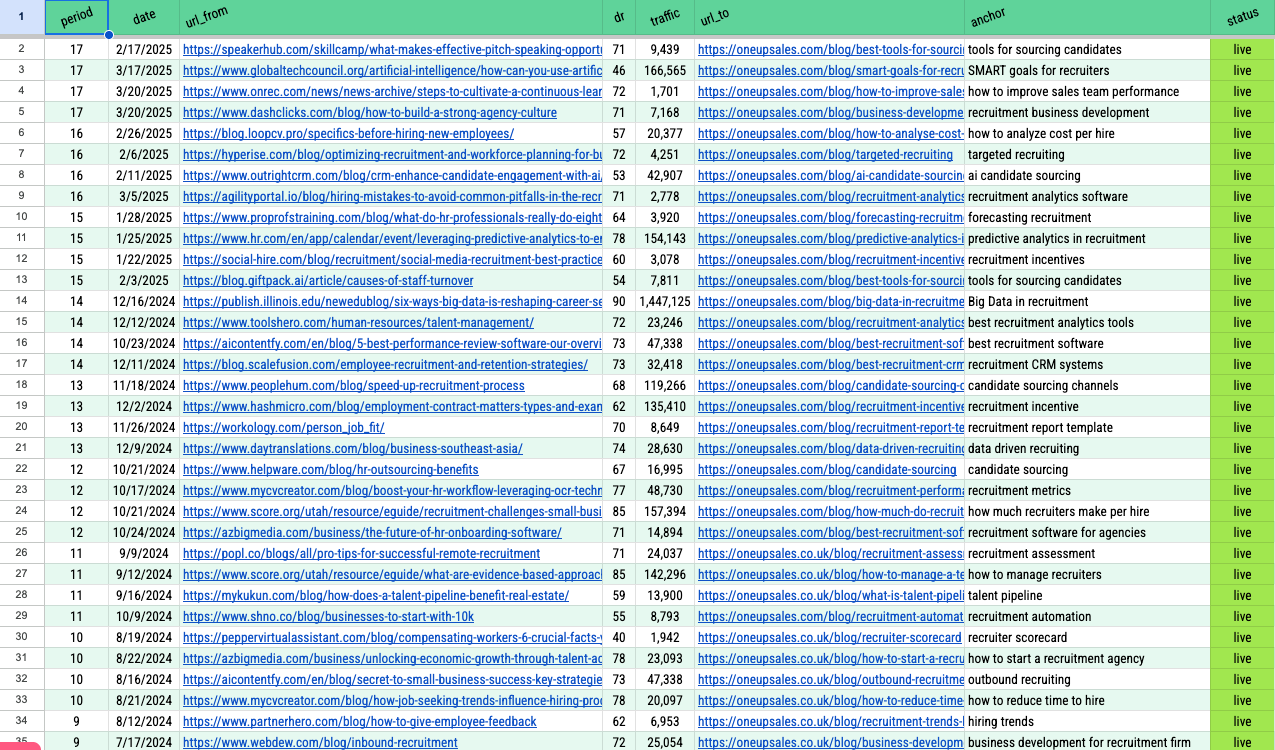
To strengthen OneUp’s domain authority and support our SEO goals, we launched a focused link-building campaign. We built 90+ high-authority backlinks (average DR 67), targeting both cornerstone blog posts and key commercial pages.
The strategy wasn’t about random links; every backlink was earned through relevant placements that added contextual value and drove long-term authority for strategic URLs.
Optimized for LLMs, Bing & beyond
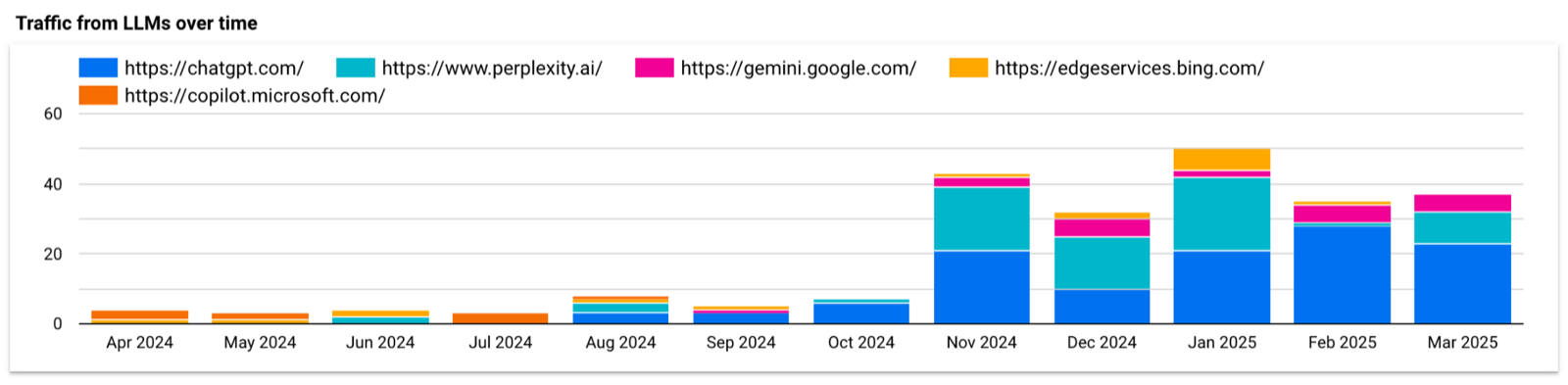
As the search landscape shifts toward generative AI and large language models, we knew OneUp’s content needed to rank not just in traditional SERPs, but in the future of search itself.
We implemented Answer Engine Optimization (AEO) and LLM optimization techniques that positioned OneUp’s content to surface in AI-generated snippets, Bing Chat responses, and zero-click answer boxes. This meant going beyond just keywords; it meant structuring content for clarity, using semantic relationships, and providing concise, high-value answers to buyer questions.
We optimized every blog post with:
- Clean schema markup and structured data
- Clear, conversational headers and subheaders
- Direct answer formatting (bullet points, FAQs, definitions)
This allowed OneUp’s blog to show up not just on Google, but also in conversational search tools powered by Bing and OpenAI.
Results
Jonny’s own words capture the impact best:
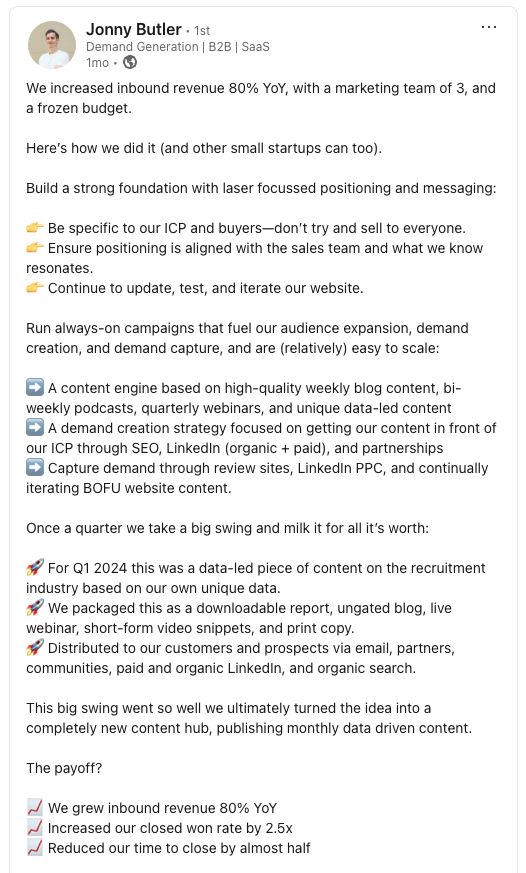
Our efforts weren’t just about traffic or content; they were about real, measurable impact. The results we achieved together with OneUp Sales demonstrate what a focused, SEO-driven inbound strategy can deliver when it’s executed with precision and consistency.
Organic growth
From an empty blog with just 50 daily impressions, OneUp’s organic visibility skyrocketed. In just over a year:
- 3.11 million organic impressions, dramatically boosting OneUp’s brand presence in search.
- 21,600 organic blog clicks, with daily traffic steadily growing to over 200 clicks.
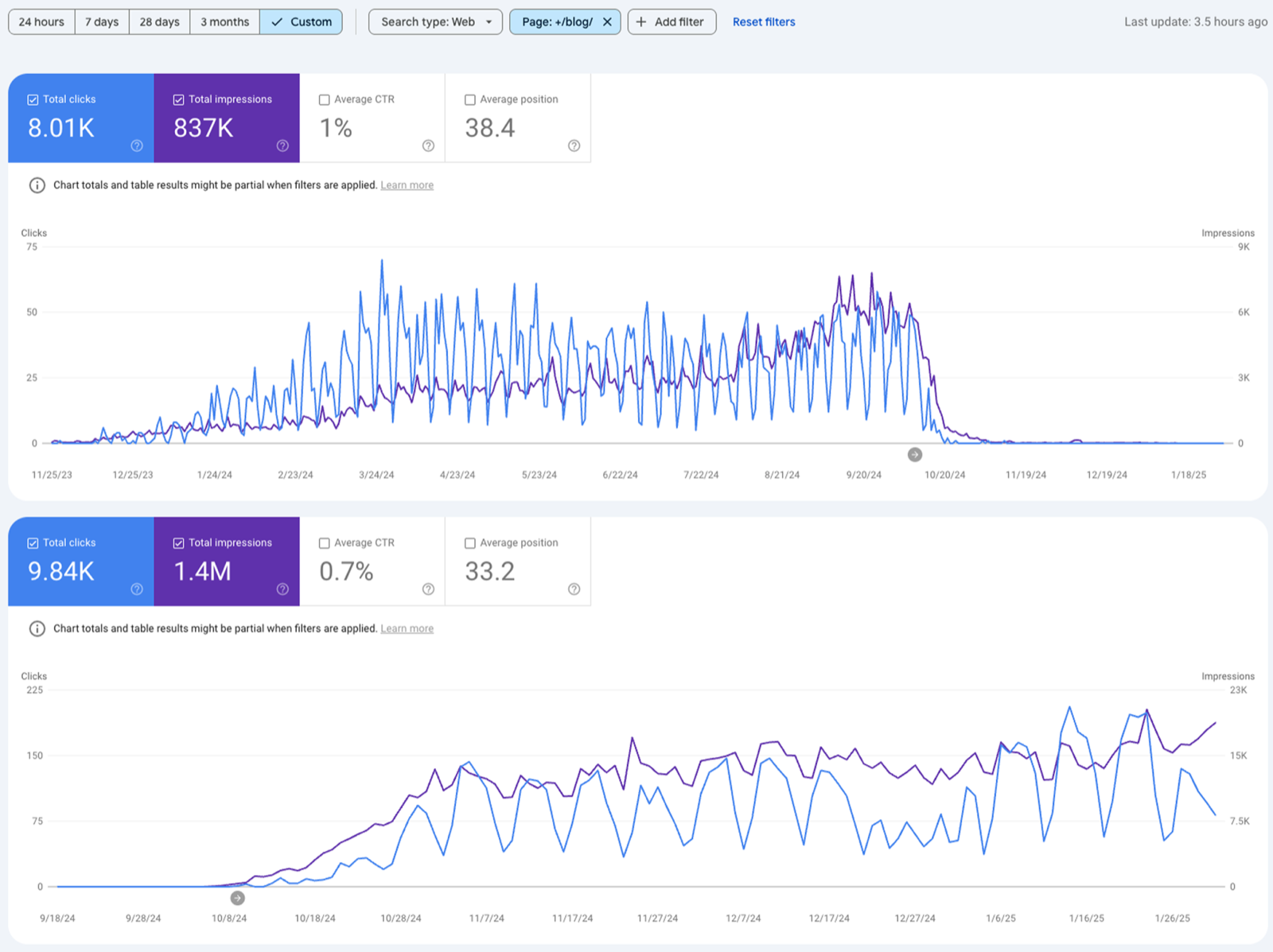
Note: The screenshots below reflect data from two separate Google Search Console properties due to a mid-project domain migration from oneupsales.co.uk to oneupsales.com.
- 711% organic clicks increase in Q1 2025 compared to Q1 2024.
- 1688% impressions growth over the same period, proof that the content was not only ranking but dominating.
- 150+ keywords ranked in Google’s Top 20, driving continuous discovery and traffic.
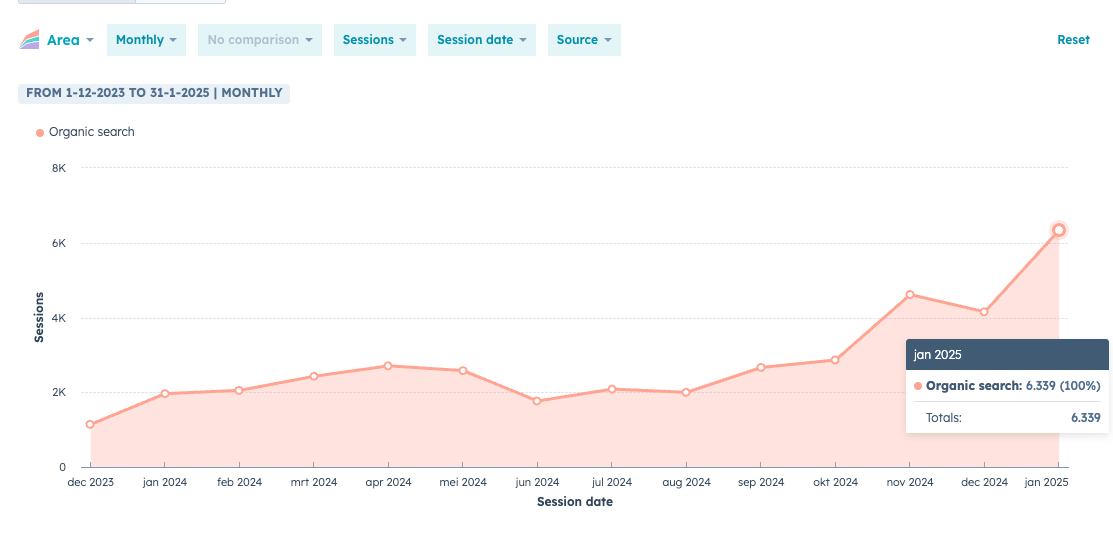
- 5x organic traffic growth: monthly organic visits grew from 1,140 to 6,339 with an average MoM growth of 11.18%, steady, compounding progress.
Revenue impact
Traffic is great, but it’s revenue that counts, and this is where the strategy really proved its worth:
- We contributed to over 100 inbound MQLs, feeding the sales team with warm, qualified leads.
- The blog played a part in £250K+ in inbound-attributed revenue: not just pipeline, but closed-won deals.
Conclusion
OneUp Sales didn’t just publish more content. They invested in a long-term growth engine, and the results speak for themselves.
In just over a year, they went from virtually no inbound visibility to dominating their niche. From zero clicks to 200+ a day. From a blog that was barely visited to one that contributed to over £250K in revenue-attributed pipeline.
This success wasn’t about chasing trends; it was about doing the fundamentals exceptionally well. Strategy, execution, and alignment came together to unlock OneUp’s organic potential and convert content into real, measurable revenue.
At SaaStorm, we don’t just build content plans; we build engines that power sustainable growth. And we do it by becoming part of your team, not just a vendor.
With strategy, systems, and collaboration, this wasn’t just content. It was impact.















.png)